You probably think a trip to the car tyre shop is a piece of cake. Just waltz in, swap out the tyres, cough up the cash and you’re done. But what’s strange is how many drivers don’t twig they’ve made a mistake till months down the line when the steering feels off or the fuel usage starts to creep up, or they catch a glimpse of those new tyres looking a bit scuffed already. And that is where the trouble usually starts. Most people don’t even bother looking at their tyres until things start to go wrong. Maybe the car starts to wander a bit on the highway. Maybe the brakes feel a bit squishy in the rain. At first, it doesn’t seem like a big deal, it’s almost as if you can just ignore it. But tyres have a huge amount to do with how a vehicle behaves on Australian roads, and a worrying number of drivers underestimate just how fast a small tyre problem can turn into an expensive one.
The hidden risk that comes with low tread depth
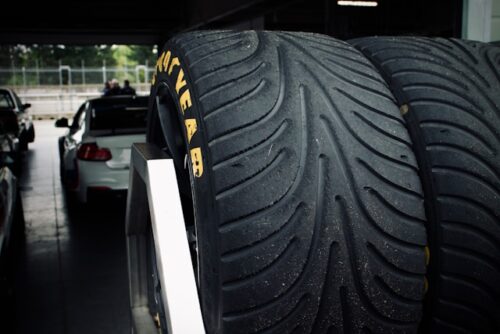
That misunderstanding often starts with tread depth. Legally in Australia, tyres are only roadworthy if they’ve got at least 1.6mm of tread left. Sounds pretty clear cut, right? So many drivers wait until the tyre gets to that point before replacing it. But here’s the part most people never hear. By the time the tyres get that low, their grip in wet conditions has already taken a pretty big hit. Some tyre experts reckon you should replace them closer to 3mm instead. At first, that sounds like a pointless exercise. Why replace something before it needs to be? But once you get your head around how tread channels push water away from the tyre’s surface, the logic changes overnight. Less tread means less water gets pushed away. Less water gets pushed away means reduced grip. And reduced grip usually becomes a real problem at the worst possible time, not during normal driving, but during an emergency stop. That in itself surprises a lot of drivers. Yet tyre wear itself tells another story.
When uneven tyre wear points to bigger issues?
Sometimes a tyre doesn’t wear evenly. One edge ends up smoother than the other. Certain bits lose tread way faster than others. Drivers often blame the tyre for being poor quality right off the bat, but uneven wear is more often than not a sign that there’s a problem with the vehicle’s alignment or suspension. And here’s where many people make a costly mistake. They replace the tyre without sorting out the actual cause. A few weeks later, the same problem is back again. The car’s still pulling a bit to one side. The steering’s still vibrating. The new tyres start wearing unevenly again. What looked like a simple tyre replacement has now turned into a cycle of repeatedly throwing money at the problem. That’s why tyre shops use all sorts of equipment like wheel balancers and wheel aligners. They’re not just swapping out rubber, they’re trying to fix how the whole vehicle interacts with the road. For many drivers searching online for tyres quote, the focus stays entirely on price. But price alone never tells you if the tyres are the right ones for your vehicle, driving style or road conditions. A cheaper option might look good at first, but poor alignment or the wrong tyre selection can end up costing you a lot more in the long run.
Why tyre age really matters more than most people realise?
But here’s where things can get really confusing for drivers. A tyre can look absolutely fine on the outside, and yet still be far from safe. People often ask whether tyres go off in Australia. The thing is, there’s no official cut-off date that suddenly makes a tyre illegal in this country. What the DOT marking on the sidewall actually shows is when the tyre was made. A lot of car owners are surprised by this because they assume old tyres become automatically useless after a certain amount of time has passed. Reality turns out to be a little more complicated than that. Age alone isn’t enough to write off a tyre. It’s heat, storage conditions, road exposure, how you drive and how well the tyre is looked after that really matter. A tyre that’s just been sitting in some poor conditions is likely to degrade a lot faster than one that’s being properly driven and maintained. That’s why experienced mechanics will always take a closer look at cracking, hardening and structural wear, rather than just focusing on the manufacturing date.
What drivers need to know about puncture repairs?
Then there’s puncture repairs which just add to the confusion. Some drivers think any puncture can be repaired cheaply. Not always the case. Australian tyre repair rules only allow you to repair a puncture in the central bit of the tread area, often called the minor repair zone. If the puncture is too close to the sidewall, it’s just not safe to repair it because that part is flexing all the time while you’re driving. And if the puncture is 6mm or larger, it’s generally not allowed to be repaired at all. Most drivers get frustrated with that because the tyre may look like it’s still in good nick. But in reality, if the damage is too close to the sidewall, it can weaken the tyre in ways that you just can’t see from the outside. Drivers often start looking for a car tyre repair near me when they notice a slow leak or a pressure warning light comes on. What a lot of them don’t realise is not every puncture is safe to repair. Where the damage is a lot more important than just how small the hole looks to the naked eye and here’s something else that’s interesting. A tyre can survive multiple punctures over time, but there’s a limit to how many repairs it can take. Some tyres may be able to handle a few minor repairs, but experience has shown that after about three or four punctures, it’s usually best to replace the tyre. Not because it fails suddenly, but because repeated repairs start to erode the tyre’s reliability in the long run.
The bigger environmental problem of tyre waste
For most people, tyres don’t even come to mind unless they suddenly need to. Then there’s the issue of tyre recycling. Australia generates around 537,000 tonnes of tyre waste every year, which is roughly 67 million passenger tyres. On the surface that sounds like a lot. But when you look closer, only a small percentage of all that tyre waste actually gets properly recycled or turned into new products.
Why smarter drivers replace tyres before they fail?
That’s why some of the smartest drivers are no longer waiting for tyre failure. They’re on to things a bit earlier. They’re paying attention to the vibration before it becomes unbearable. They’re checking the tread level before it gets to the absolute minimum. They’re spotting small problems before they quietly become big ones. Because once a tyre finally starts showing its age, the expensive part has usually already started.