Training of fire workers is very important to equip them with the unforeseeable nature of their occupation. Due to the advancement in technology, the mode of training these courageous people is also changing. Move on to virtual fire training solutions, one of the new methods, which combines the technology with the necessary firefighting skills. Things would be so much different, and life-saving techniques could be practiced without going to actual firehouse and jeopardizing life. This new approach has unlimited opportunities not only to the trainees but also to the instructors.
The days of traditional classroom environment, as well as static simulations, are long gone. Virtual fire training also brings people into the real world settings where they may interact with simulated scenarios that replicate the real life scenario. It is not only about knowing how to extinguish fires but in making decisions when there is a pressure to make but where the well-being of everyone is concerned. With the increasing number of departments considering this possibility, it is apparent that virtual training is reshaping the face of firefighter training in highly exciting ways.
Advantages of Virtual Fire Training
Virtual fire training has unmatched flexibility. The trainees are able to participate in the real world situation anywhere, whereas the traditional classroom was limiting them. This flexibility enables departments to hold meetings that are convenient to them.
Accessibility is also another major benefit. The firefighters are able to access training content whenever they like, which strengthens learning without being constrained by a strict schedule.
Virtual training is interactive hence more engaging. They allow the participants to become engaged with simulations that replicate real life scenarios and train critical thinking and decision making which are important in emergency situations.
Finally, virtual virtual fire safety training improves teamwork across teams located in different areas. It enables the exchange of experiences and strategies, broadening the overall knowledge base within the firefighting community.
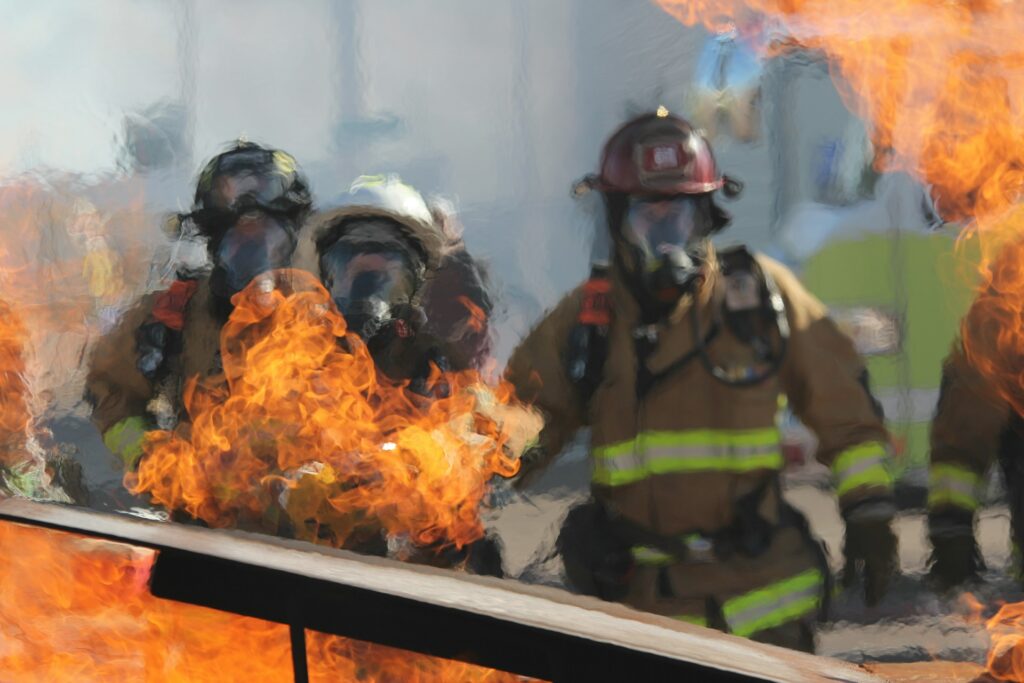
Cost-Effective Option for Fire Departments
There are fire departments that are usually on lean budgets. Conventional training approaches may put strain on resources and hence hard to offer holistic training.
An alternative to this is the use of virtual fire training solutions which are cost effective. They save on the cost of physical materials and traveling cost of instructors. Departments are able to save cash and at the same time provide their teams with the best training.
Another huge cost that is avoided by virtual training is the maintenance of equipment. Simulations do not require wear-and-tear of gear since they occur in an electronic setting. This implies that the finances could be diverted to other urgent requirements in the department.
Also, these platforms could be used to schedule flexibly. During the downtimes, training is possible without affecting the normal operations and thus the time used in training is the most productive and the cost is minimal. Being less logistically challenging and with lower overheads, virtual solutions offer an attractive alternative to the fire departments that are in need of keeping a high level of safety and preparedness without emptying the bank account.
Ensuring the Safety of Trainees and Instructors
The number-one priority in fire training is safety and this is the priority of the virtual solutions. The trainees will be able to participate fully without fear of being injured as they simulate real-life situations without being at risk.
Online learning enables students to be taken through complicated scenarios by the instructor without fear. The trainees acquire essential skills and are exposed to less risky environments that may be dangerous in the case of traditional training.
The superior technology provides virtual reality that mirrors real-life challenges that the firefighters encounter. This kind of realism makes them ready to face an emergency whilst everyone remains secure.
Also, distance training eliminates the necessity of great meetings. Reduced number of individuals in a single location restrains the number of possible accidents or health hazards that occur in group activities.
The application of virtual platforms creates the culture of safety between all of them. The environment will not pressurize the trainers and trainees to such an extent that they would be unable to concentrate on the skills required to uphold firefighting practices.
Realistic Simulation and Scenario-Based Training
Virtual fire training programs are also superior in providing realistic simulation, scenario based training that is highly reflected to real fire fighting scenarios. These are the simulation experiments that enable the trainees to encounter different challenges without the risk that live exercises involve.
The participants are able to interact with high quality virtual environment where they are exposed to various situations like structural fire, hazardous materials or rescue missions. This practical method improves the ability to think critically and make decisions in the pressure.
These programs foster confidence and readiness to face real-life emergencies since they allow firefighters to train in a secure environment. The trainees can learn on what they are doing in real time and make adjustment in strategies and also enhance performance.
Furthermore, teachers can customize the situations to meet the needs of certain department or recent events in the community. This personalization makes the learning process relevant and this approach has direct benefit to the preparedness and response capability of the team.
With the ever-changing nature of technology, the possibility of sophisticated virtual training fire aids is also changing. Implementation of these new solutions is not only a way of modernizing training but also strengthens an organization in terms of their commitment to safety and excellence in emergency response operations.