


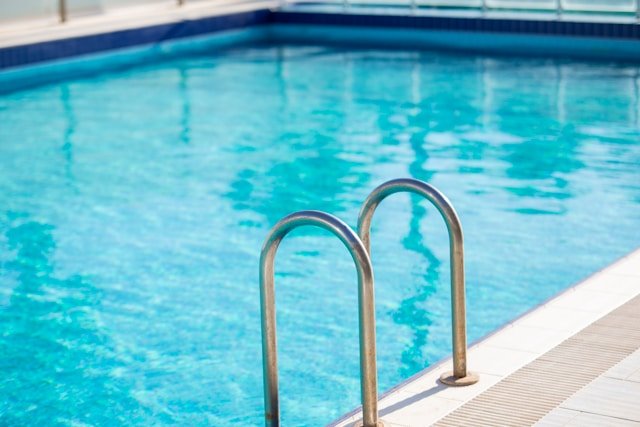
There’s a point in every pool owner’s year, usually sometime in late February, when your pool starts guzzling chemicals at an alarming rate, and nothing seems to be working anywhere near as well as it should be. More chlorine gets tossed in the mix. The filter gets given a good clean. The pH gets tweaked yet again. But still the pool just doesn’t look right. Now, in most cases, it’s not because the maintenance is being messed up, it’s just that you’re treating a repair problem as if it were a maintenance task. That’s the distinction, the difference between what ongoing servicing can sort out and what needs a specialist to come in and figure out what’s really going on and fix.

Routine Maintenance Has Its Limits And Most Owners Are Way More Often Than They Need To Be Reaching Them
Routine pool maintenance is all about water testing, adjusting the chemicals, cleaning or backwashing the filter, clearing the pump basket, vacuuming and giving the surface a good brush. It’s all about keeping your pool running in the first place. What it can’t do is figure out and fix equipment failures, cracks in the structure, major leaks or chronic chemistry problems that are actually caused by a piece of kit that’s on its last legs. A pool that needs a major chemical adjustment every time your maintenance person comes around is not a maintenance problem, it’s a question of what’s really wrong being put off until later. WA Health recommends that residential pool owners test their water at least once a week during the summer and after heavy usage or a big storm. That’s the baseline for maintenance, but it’s not a substitute for actually working out what’s going on.
Knowing When To Call In The Experts And Move From Maintenance To Repair Mode
If you’re losing more water than normal evaporation (in this part of WA that can be anything from 5 to 7 millimetres a day) from your standard outdoor pool you’ve got a leak. Adding water and just carrying on with the usual chemical adjustments isn’t going to sort it, what you need to do is get someone to come and find the source of the leak. If your pool is making a weird noise, vibrating or losing prime intermittently it’s a sign that something mechanical is about to give way (or already has). No amount of routine maintenance is going to put that right. And if your chlorinator is going slow despite being clean and in working order, it’s probably time to replace it rather than just recalibrating it, and giving in to the short term cost saving just prolongs the problem.
Visible cracks in the plaster, concrete, or tile grout of your pool are a problem that’s not going to go away on its own, and they’re going to get worse with each passing season if left unrepaired. They allow water to get into the surrounding soil, which starts to soften it progressively over time. It’s not the sort of thing you can just put off until later.
Pool Equipment Lifespans In Our Part Of WA Are Pretty Specific And Worth Understanding
Down in the southern Perth coastal area, your pool equipment, and particularly the equipment, has it pretty tough: high UV, salt air which can be a real issue in areas like Port Kennedy, Rockingham and Safety Bay, and very hard water chemistry. A chlorinator cell typically lasts you around five to seven years in average WA conditions. A pump motor has got about 8 to 12 years left in it if you properly maintain it; a filter housing will last you 15 to 20 years; and the pool shell itself, if you keep the original finish in good nick, will last you 20 to 30 years before you need to resurface it.
Pool Inspection Report Is A Pool Repair Document Rather Than A Maintenance Document
A pool inspection report prepared by a licensed pool technician includes equipment, water chemistry, surface conditions, leaking signs and safety barrier compliance. For prospective property owners in the area between Port Kennedy and Mandurah, it is probably one of the most economical due diligence procedures available. A pool that looks clean during the house inspection may have an aging pool pump, a defective chlorinator cell or a pool fence which doesn’t comply with WA pool barrier standard. Under the WA Building Act, it is the duty of the pool owner to ensure that their pool has a compliant safety barrier. Failure to comply with the Act results in infringement notices for the owner and in case of any accident it leads to considerable liabilities. Pre-purchase pool inspection that reveals these faults prior to the settlement will be only a fraction of the cost of correcting these problems after settlement.
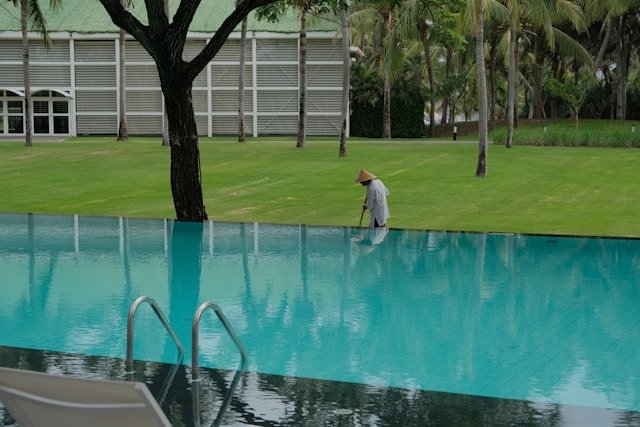
When Pool Owner Managed Service Is Practical And When It Is Not
Weekly chemical checking and balancing is quite feasible for an alert owner with high quality test equipment and consistent procedures. This is the area in which owner operated pool maintenance and repair specialists pool management works effectively and economically. Equipment diagnosis, refrigerant handling, wiring and chlorinator cells replacement and leaks detecting are definitely not areas which should be handled as DIY pool management. These procedures need specialized equipment and formal licensing or both. Overestimating pool management is not likely to result in an abrupt accident but rather in gradual deterioration of the surface and pool equipment due to wrong decisions or neglecting.





Comments are closed.